January in schools can feel relentless.
The weather is cold and dark. The term is long. Energy is low. And the challenges stack up quickly: HR issues, safeguarding concerns, staff sickness, increased pressure on those still in school, and the responsibility of holding things together when capacity is stretched.
Much of this sits firmly outside your control.
And yet, January is often the moment when leaders turn that pressure inward – questioning their resilience, their patience, or their capacity, and wondering why everything feels harder than it should.
This piece isn’t about fixing yourself.
It’s about understanding something fundamental about leadership wellbeing:
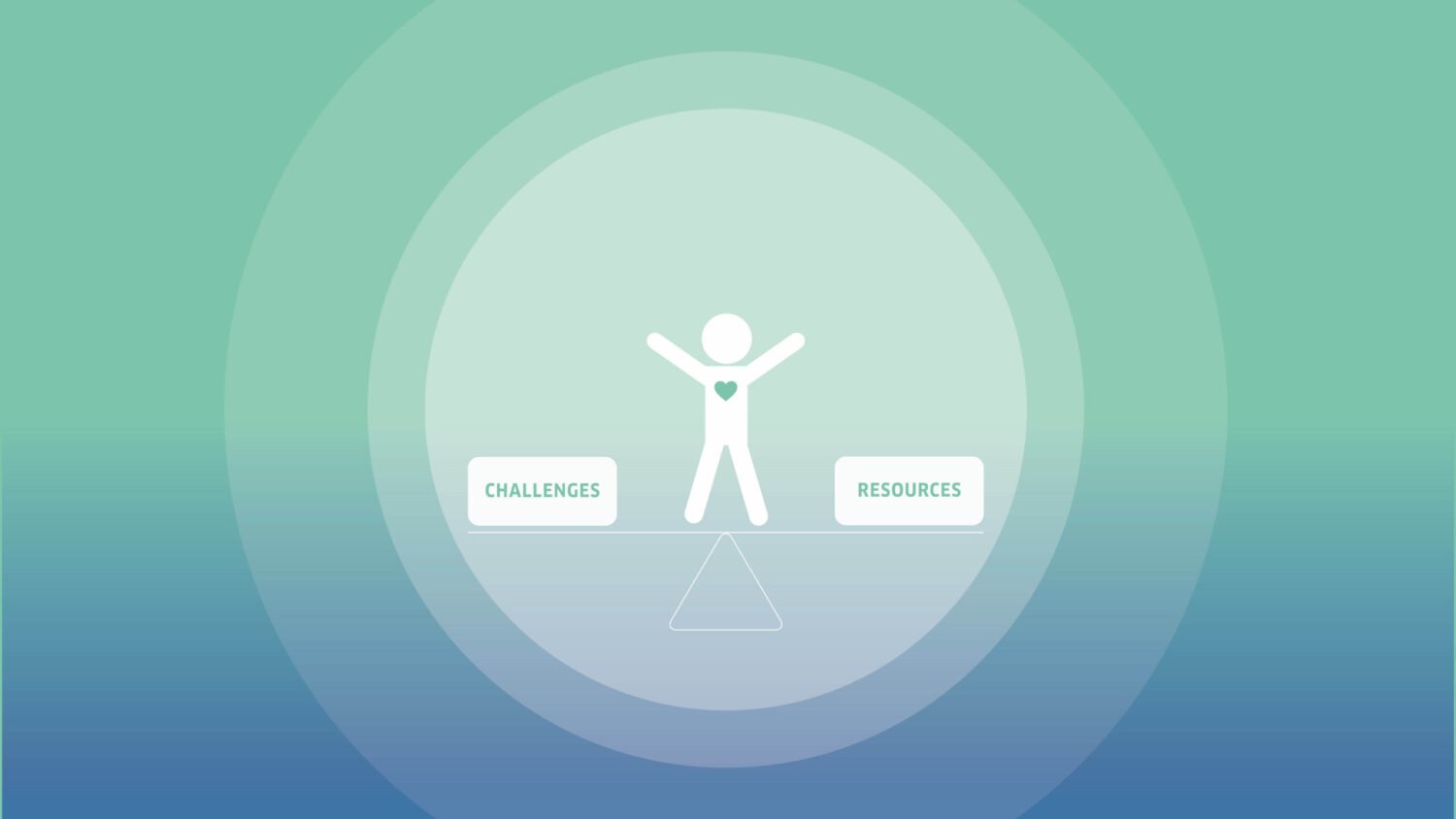
wellbeing is the balance between challenges and resources.
When challenges outweigh resources for too long, strain builds. Not because you’re failing as a leader, but because your internal system is under-resourced.
The purpose of this piece is simple: to offer practical ways to support yourself – and, by extension, the people you lead – when the challenges of January outweigh the resources available to meet them.
The balance that matters: challenges and resources
It can help to visualise wellbeing as a seesaw.
On one side sit the challenges of leadership: responsibility, emotional labour, constant decision-making, uncertainty, time pressure, difficult conversations, disrupted routines, and the cumulative toll of winter.
On the other side are the resources: the things that steady you, support your energy, and restore your capacity to lead well.
In January, the challenges tend to pile up. When that happens, the seesaw tips, unless we actively add weight to the resources side.
If we can’t reduce the challenges (and often we can’t), we have to increase the resources.
That isn’t indulgence. It’s how leadership capacity is sustained.
Resourcing is not self-care
For many leaders, the idea of “self-care” feels unrealistic – or even irritating – as if it’s another demand layered onto an already full role.
Resourcing is different.
Resourcing is about:
- steadying yourself when things feel intense
- supporting your energy, patience and focus day to day
- repairing wear and tear over time.
It’s closer to first aid, maintenance and repair than pampering.
And the good news is this: there are really only three levels of support leaders need.
- Something to steady you now
- Something to support you daily
- Something to restore you deeply over time.
Knowing which one you need – and when – makes a significant difference to how you lead under pressure.
1️⃣ SOS Resets: in-the-moment steadying
There are moments in leadership when what you need isn’t another strategy or plan.
You need something that helps you steady yourself right now.
SOS resets are particularly useful in moments of pressure – whether that’s a situation you’re navigating or an internal state you’re experiencing – such as:
- difficult conversations
- conflict
- overwhelm
- panic
- shutdown.
They are not trivial.
SOS resets help the body move out of high alert and into a more settled state, restoring enough steadiness to think clearly, respond rather than react, and move forward with greater capacity.
Examples that are realistic in a busy leadership day include:
- taking a few slower, more conscious breaths
- stepping outside briefly for fresh air
- drinking a glass of water
- moving your body, even just walking the corridor
- a calm, steady interaction with a pupil
- a brief, supportive conversation with another adult.
These moments serve a real, biological function and they directly affect how you show up in the next conversation, meeting or decision.
2️⃣ Daily Regulation: supporting your leadership baseline
Daily regulation is about how steady you feel most days – not just in moments of crisis, but in the background of leadership life.
Your baseline includes things like:
- how easily you’re triggered
- how patient you feel
- how quickly stress builds
- how well you can focus
- how settled your mood feels
- how well you sleep.
When your baseline is high, it takes very little to tip you into overload. Everything feels closer to the edge.
Daily regulation helps lower that baseline over time, so you’re not constantly operating on high alert. When pressure shows up, you have more capacity and recover more quickly.
Daily regulation doesn’t need to be time-consuming or perfect.
What matters is consistency, not intensity.
Examples might include:
- walking outside when you can
- eating regular meals
- talking to someone you trust
- movement you genuinely enjoy
- music
- earlier nights where possible
- clearer boundaries with phone or work.
Small, regular habits regulate the system far more effectively than occasional big fixes.
3️⃣ Deep Rest: repair and restoration over time
The third level of resourcing is deep rest.
This isn’t about calming down after a difficult day.
It’s about repairing and restoring leadership capacity after sustained pressure.
Deep rest helps restore you from long periods of pressure, emotional fatigue and cumulative strain, including:
- long-term stress
- emotional exhaustion
- that “done in” feeling.
And it needs to be said clearly: Deep rest is not a luxury. It is a biological requirement.
Examples might include:
- proper time off
- holidays or retreats
- time away from responsibility
- therapy or coaching
- genuine rest without guilt.
Deep rest is often postponed – especially by leaders – yet it’s the very thing that allows you to continue leading well over time.
Choosing the right resource at the right time
When things feel hard, one of the most useful leadership questions is:
- Do I need an SOS reset right now?
- Do I need better daily regulation most days?
- Or do I need deep rest over time?
These aren’t competing options.
They’re different forms of support for different moments.
Misjudging the level of support we need often leads to frustration – trying to fix long-term exhaustion with a few deep breaths, or waiting for time off when what’s needed today is a pause and a glass of water.
Why this matters for leaders
Here’s the part leaders often underestimate:
Resources are usually things you enjoy.
They’re not trivial.
They’re not optional extras.
They are essential inputs for sustained leadership.
Connection, rest, movement, laughter, shared meals – these don’t just feel good.
They actively support your capacity to lead, decide, regulate and respond.
When challenges are high, resourcing yourself becomes more important, not less.
A few gentle reflection questions
You might find it helpful to reflect on these:
- Which level of resourcing would make the biggest difference for you right now, and why?
- When leadership feels demanding, what helps you come back to feeling even a little steadier?
- What small, realistic change could you make that would support you when pressure is high?
There’s no right answer, just information you can use.
January is demanding, and that’s not a leadership failure
January in schools is tough. The pressure is real. The responsibility is heavy. And many of the factors that make this month hard sit outside your control.
Resourcing yourself isn’t about lowering standards or stepping back from leadership.
It’s about staying well enough to lead.
When challenges outweigh resources, strain is inevitable.
When resources increase, capacity follows.
That’s not a mindset trick.
It’s how humans work.